
Sex Offender Checks in Tangipahoa Parish
The official starting point is the Louisiana State Sex Offender and Child Predator Registry, managed by Louisiana State Police's Bureau of Criminal Identification and Information. The registry offers identity and location-based paths. A name search works best when a person is already known. A geographic search is better for reviewing reported locations near a home, school route, or other familiar place in Tangipahoa Parish. Neither route should be treated as a guarantee that a person is present at a listed address.
Local law enforcement supplies registration information to BCII, but the research did not identify a separate TPSO public offender map. Use the state registry as the public record of reference. For a question about the registry itself, LSP lists 1-800-858-0551, weekdays from 8:00 a.m. to 4:30 p.m. Central. The registry office also receives mail at P.O. Box 66614, Box A-6, Baton Rouge, LA 70896.
The LSP registry landing screen shows the official gateway and the conditions a visitor must accept.
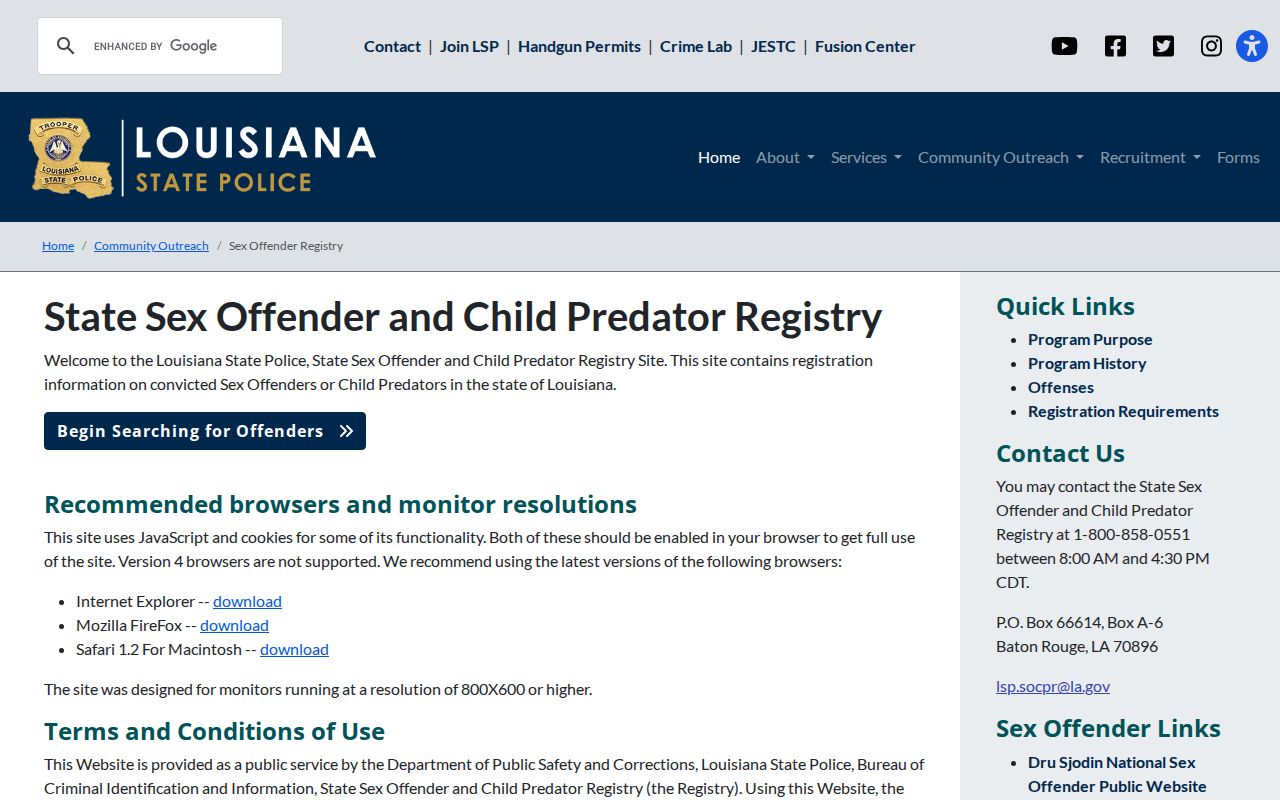
That gateway matters because it places the state's accuracy and responsible-use cautions before any Tangipahoa Parish result appears.
Tangipahoa Registry Conditions First
The search does not open directly on a list of people. Visitors must read and accept the conditions of use. LSP explains that it relies on information sent by corrections, courts, sheriffs, police departments, and other agencies. It does not promise that every entry is accurate, complete, or current. That warning is central to reading a result, not boilerplate to skip.
A reported address is a data point supplied through the registration system. It is not live location tracking. If a profile seems outdated, do not contact the registrant. Use official law-enforcement channels. Call 911 for an immediate danger; use the LSP registry line for a non-urgent question about state registry data.
The same caution applies to compliance labels and verification dates. They describe what the registry showed at the time of access. They do not establish why an update is pending, whether a separate court event occurred, or whether a person is in custody. For custody notices, use VINELink. For the conviction file, use the court named in the profile. Keeping those sources separate prevents a public registry result from being stretched beyond the purpose Louisiana assigns to it.
How to Search the Louisiana Registry
Move through the official search in a fixed order. This reduces false matches and keeps a Tangipahoa Parish registry search tied to the fields the state actually publishes.
- Open the LSP registry, read the conditions of use, and accept them to reach the search interface.
- Choose name search for a known identity or geographic/address search for community awareness in Tangipahoa Parish.
- Review results by photograph, aliases, physical description, and reported location. A shared name alone is not enough.
- Open the profile and read the tier, offense, jurisdiction, registration status, and update information as separate facts.
| Field or Control | Type | Required | Use |
|---|---|---|---|
| Conditions of Use | Consent | Yes | Must be accepted before searching |
| Name Search | Identity mode | Unspecified | Looks for a known person; exact subfields may vary |
| Geographic / Address Search | Location mode | Unspecified | Finds reported locations near an address or area |
| Map / Results | Interactive results | No | Displays reported location information |
| NSOPW Link | External search | No | Adds participating jurisdictions beyond Louisiana |
Note: Registration status does not allege a new offense; it reports the person's status within the registration system.
Avoiding a Tangipahoa False Match
Common names create the clearest risk of a mistaken identification. Start with the photograph and aliases, then compare physical description and reported location. Read the conviction offense, statute, date, and jurisdiction together. Someone may have moved across parish or state lines, and an out-of-state conviction may be classified under Louisiana's equivalency rules.
Do not infer that a person with the same name is the registrant. Do not infer current presence from a map pin. If identity remains uncertain, stop. LSP's conditions place the burden on the user to treat the information with care, and the state expressly declines to guarantee timeliness.
If a profile appears to conflict with another official source, note the exact field and date rather than taking a screenshot as a permanent record. Registration information can pass through several agencies before BCII publishes an update. The LSP registry line can route a non-urgent data question, while the relevant law-enforcement agency can address an immediate local safety concern. Court files remain the better source for the underlying conviction and disposition.
Inside a Registry Profile
A Louisiana public profile separates identity, location, conviction, and compliance data. Victim names are not a public profile field. Read each field on its own terms.
| Name & Aliases | Published identity names used to distinguish a registrant. |
|---|---|
| Photo & Physical Description | Photograph, physical traits, and identifying scars, marks, or tattoos when published. |
| Reported Address | The residential location reported through the registration process, subject to the registry's update caveat. |
| Offense & Statute | Conviction offense, legal section, date, and jurisdiction. |
| Tier | Louisiana Tier I, II, or III classification tied to offense and statutory factors. |
| Registration Status | Compliance or other registration status and related verification information shown by the current interface. |
Profiles may also publish employer or school locations and vehicle details where Louisiana law authorizes those fields. They do not show every court pleading, jail event, or investigative record. For the underlying case, use the court in the conviction jurisdiction.
When Tangipahoa Searches Cross States
The LSP registry is the best state-specific source. The National Sex Offender Public Website adds a national search across participating jurisdictions. It is useful when a reported move, prior conviction, work location, or family safety concern crosses Louisiana's border. NSOPW supplements the Louisiana profile; it does not replace local reporting or resolve a disputed Louisiana entry.
The official NSOPW interface illustrates the national layer available after a Tangipahoa Parish search.
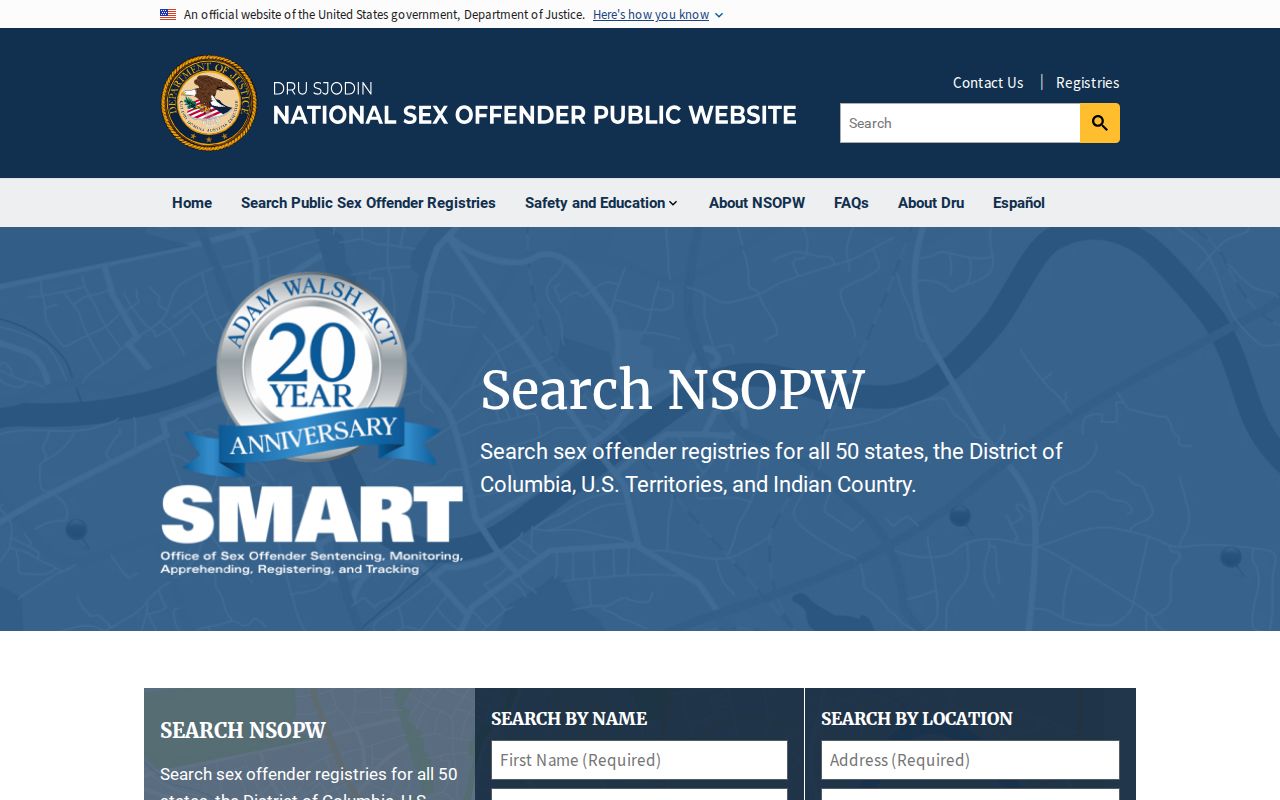
Use the national result to identify the responsible jurisdiction, then confirm the profile through that jurisdiction's official registry.
Louisiana Registration Levels and Requirements
Louisiana uses three tiers. The duration and check-in schedule rise with the statutory tier, but the offense label alone may not answer every case. Attempts, offenses from another state, juvenile adjudications, and later convictions can change the result. Consult the current LSP tier and offense guidance and the registration statute before relying on a summary.
| Tier | General Duration | General Frequency |
|---|---|---|
| Tier I | 15 years | Annual registration |
| Tier II | 25 years | Semiannual registration |
| Tier III | Lifetime | Quarterly registration |
The official LSP offense and tier page presents the state's classification framework.
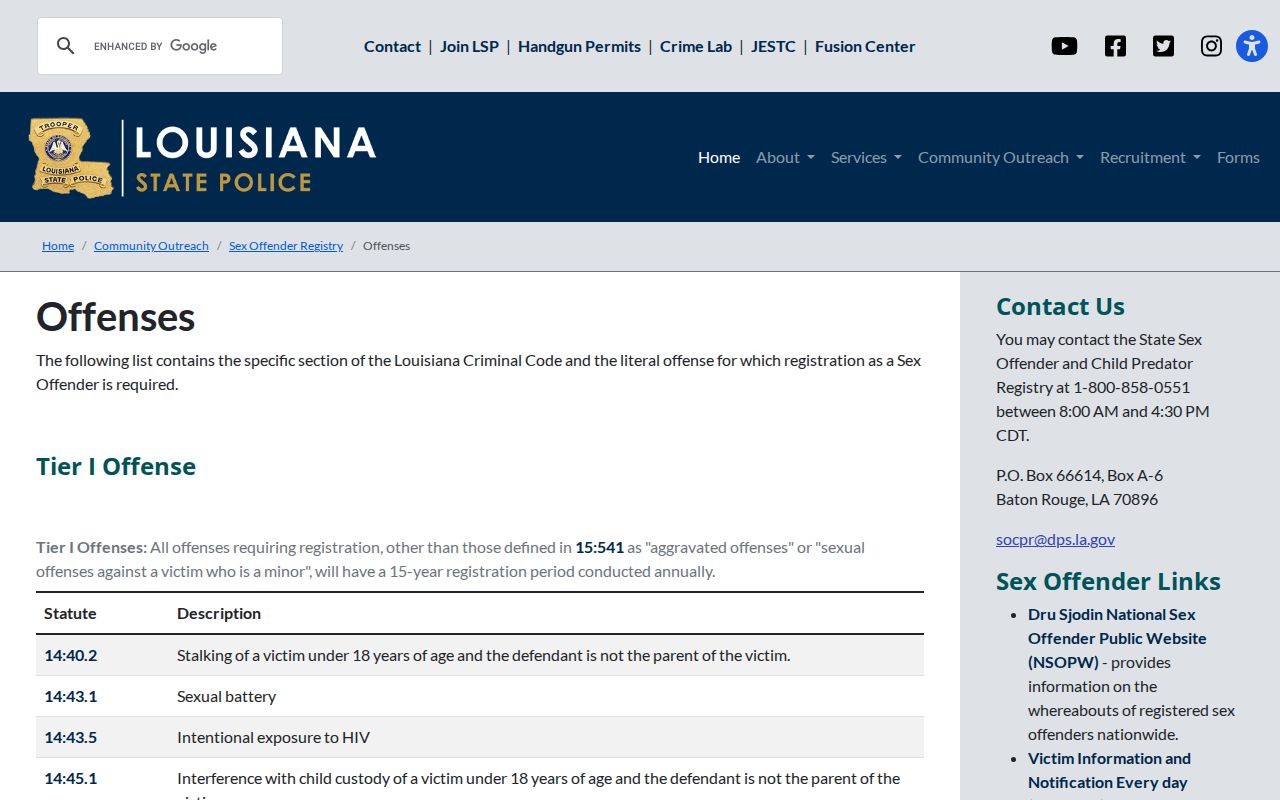
That framework should be checked against the current facts rather than reduced to a label copied from an old record.
Tangipahoa Reports Reach BCII
Louisiana's registry is a shared reporting system. Courts, corrections agencies, sheriffs, police departments, and other designated offices send qualifying information instead of LSP independently observing every change. Louisiana R.S. 15:545 requires local agencies to forward fingerprints and information to BCII within three business days in the circumstances the law describes.
Registry flow: local registration and court information › law-enforcement reporting › BCII processing › public registry profile.
The official reporting-duty statute shows why a local update may move through more than one custodian.
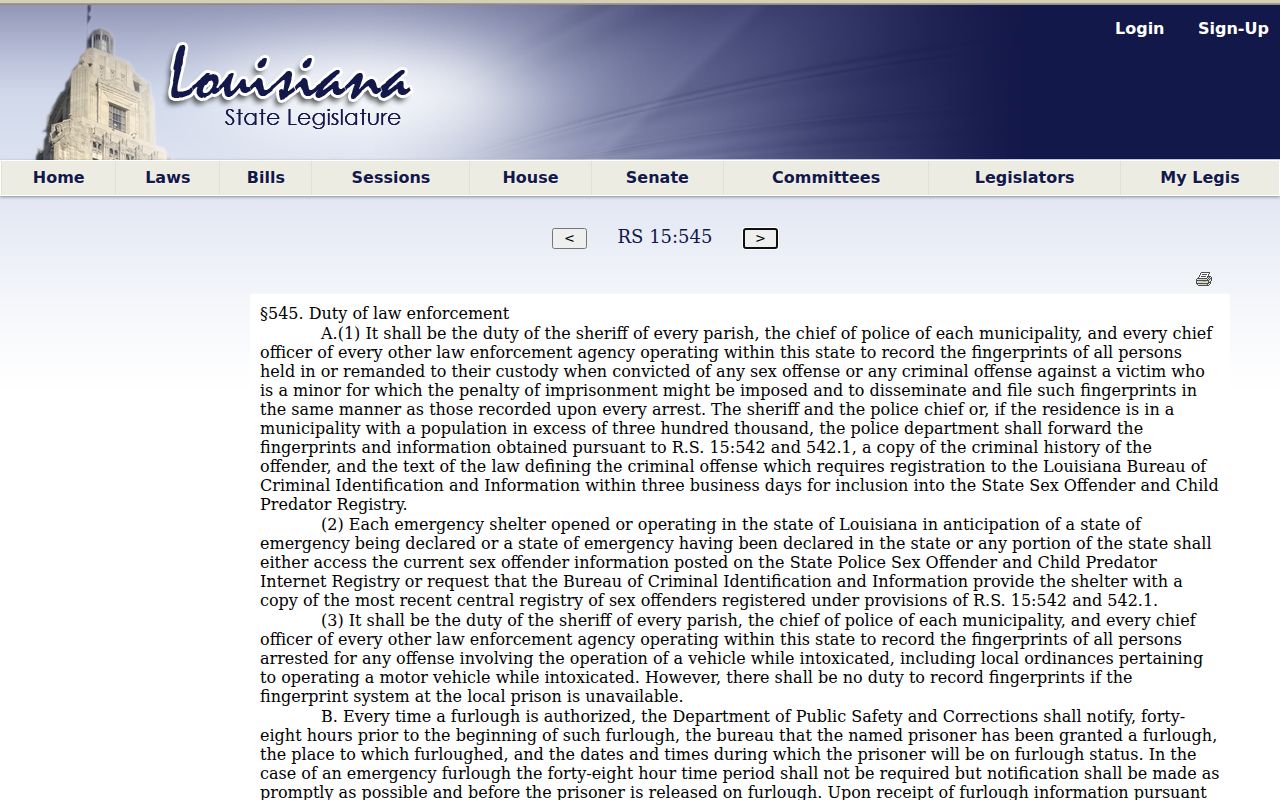
This multi-agency flow also explains the registry's warning that timing cannot be guaranteed.
A court may create the conviction record, corrections may hold release information, and a sheriff or police department may collect a local registration update. BCII joins the reportable data into the state system. If one public field looks wrong, identify which agency originated that field before seeking a correction. Sending a general complaint to every office can slow the response because no single office owns every part of the profile.
Who Louisiana Requires to Register
Louisiana R.S. 15:542 establishes who must register. The current law and LSP offense list control. Broad phrases such as “sex offense” do not safely resolve tier, length, or reporting duties because the statute accounts for the specific offense and other legal facts.
The official registration statute is the primary source for coverage.
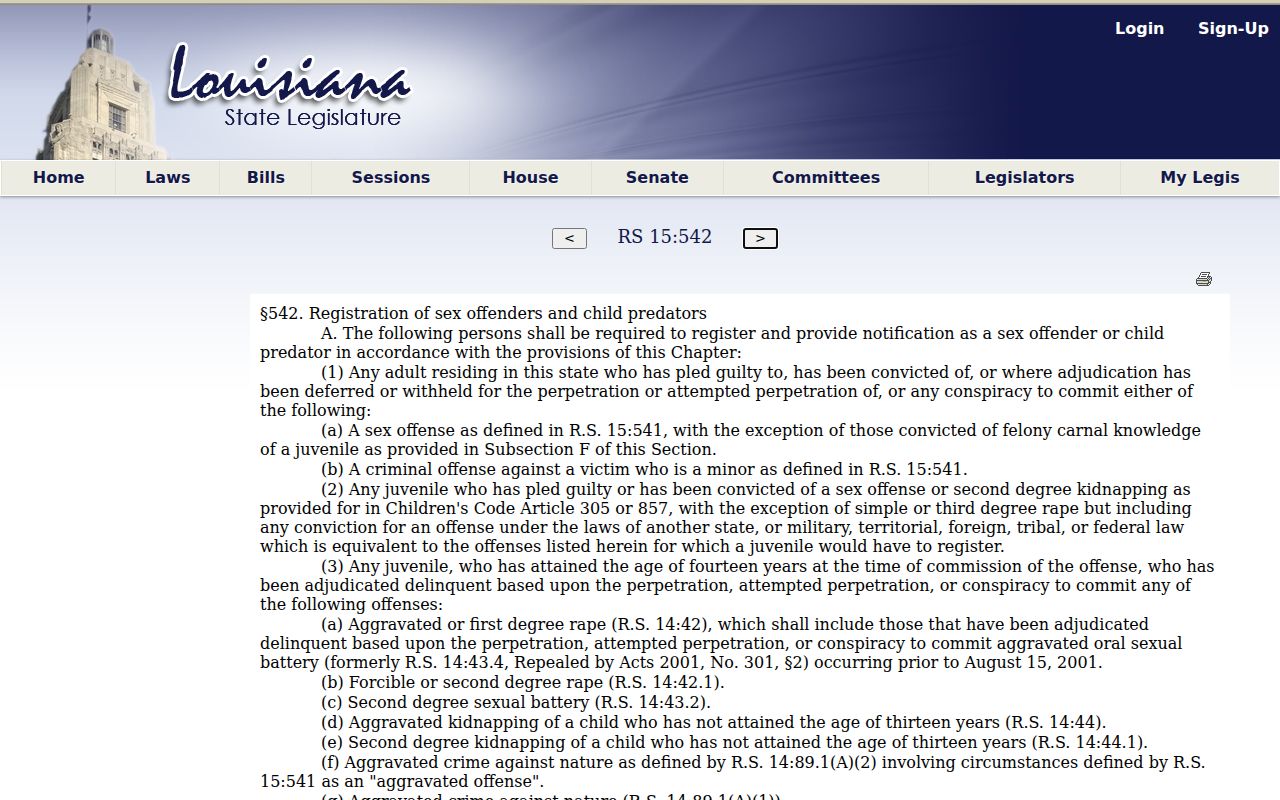
Use it to verify legal coverage, while using the public profile for community awareness.
Registry Data and Criminal History
A registry profile is not the same as a complete criminal-history record. BCII dissemination is separately governed by Louisiana R.S. 15:587. The public registry publishes the fields Louisiana law makes available for qualifying registrants. It does not open unrestricted access to every fingerprint-linked record or every court document.
The criminal-history dissemination statute helps mark that boundary.
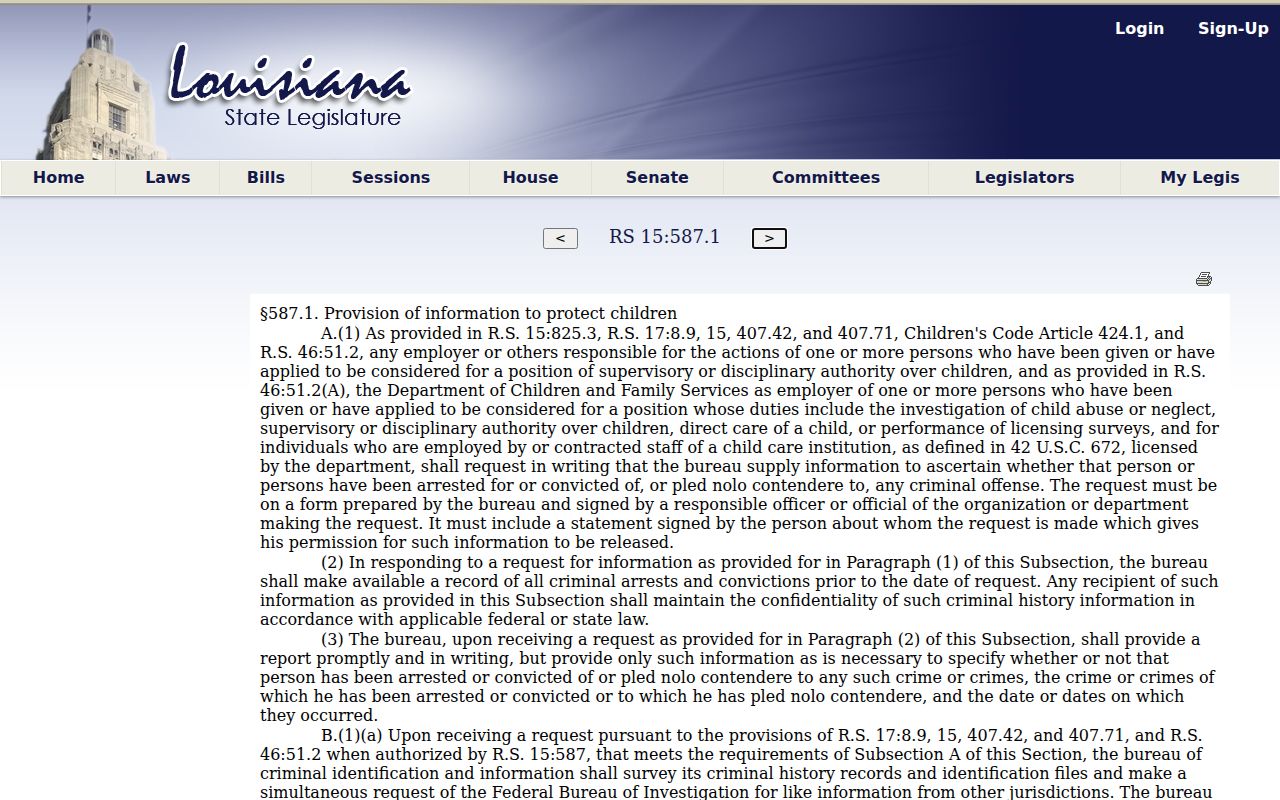
For a complete case outcome, confirm the conviction with the originating court rather than expanding a registry profile beyond its stated purpose.
Community Notification and Lawful Use
Registry information supports personal, family, and community safety planning. Use geographic results to understand reported locations, discuss age-appropriate safety steps, and call law enforcement about an urgent threat. Use the LSP contact line for a non-urgent registry concern. VINELink is a separate service for custody notifications and should not be confused with registration status.
The state warns against relying on the database as flawless or immediate. Confirm critical facts with the agency that supplied them. Never confront a registrant, publish threats, or use registry data to intimidate a household.
Community awareness works best when the search remains fact-based. Save the official profile URL and note the access date. Recheck the live registry when circumstances change rather than relying on an old copy. For a concern that spans Louisiana and another state, compare the official state entries through NSOPW and contact the jurisdiction responsible for the disputed data.
Use Registry Information Lawfully: Registry information must not be used to harass, threaten, intimidate, or commit a crime. Louisiana's exact misuse-penalty subsection was not confirmed in the project research, so no penalty amount is stated.